Written this month
The September reset in family routines
For families in Britain the year turns in September, not January. Two weeks of small decisions then set the shape of everything until Christmas.
On this page
- Why the year turns in September
- What to fix in the first fortnight
- What to leave alone
- The reset for the adults
Published 20 August 2026.
01 Why the year turns in September
January arrives when nothing structural changes: the same school, the same class, the same bus. September changes the timetable, the teacher, sometimes the school, often the friendship group, and always the amount of daylight left after tea.
For a household that runs across two homes the effect is doubled, because both homes are absorbing the new timetable at once and each is adjusting to a version of the week it has not seen before. A rhythm that worked perfectly in June can be quietly wrong by the third week of term.
The useful response is to treat the first fortnight as a deliberate reset rather than as a return to normal, and to expect to change two or three things on purpose.
02 What to fix in the first fortnight
Get the term dates into the calendar before the first week is out, including inset days, which are the single commonest cause of a household discovering on a Sunday night that Monday is not what it thought. The mechanics are in the shared family calendar.
Check that the ordinary week still lands sensibly against the new timetable. If a child now has a club that finishes at six on the night of a handover, the handover time needs to move, and moving it in week two is far easier than resenting it in week nine.
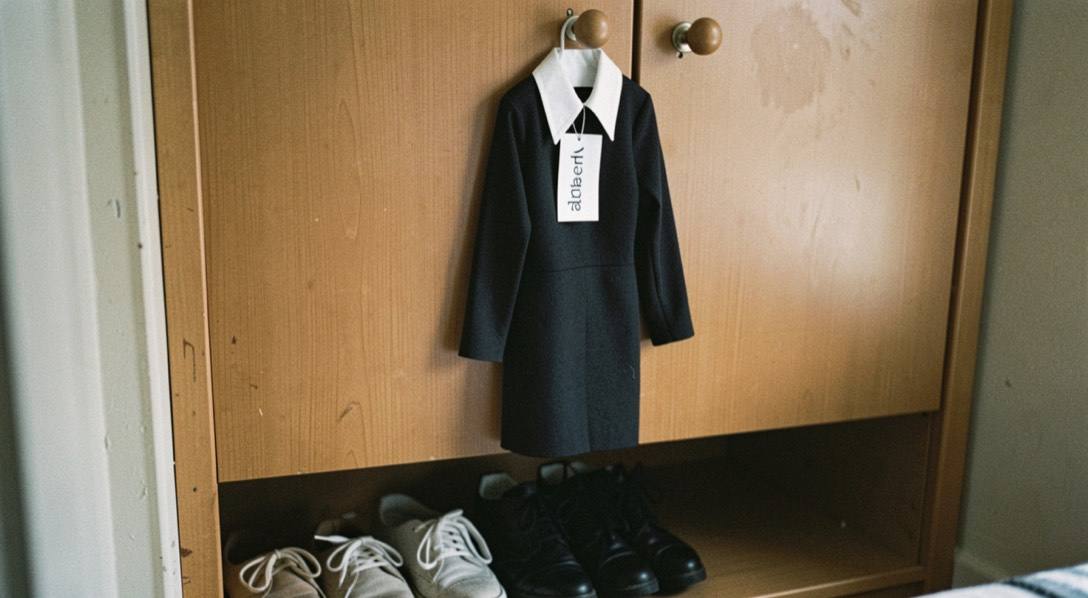
Look at the kit. New shoes, new bag, a coat that still fits, and a decision about which house holds the PE kit this year. This is a good moment to reset the duplicates described in small habits that steady a shared week.
- Term dates and inset days into the calendar in week one.
- Test the ordinary week against the new timetable.
- Move handover times now rather than tolerating them until half term.
- Reset the spare kit in both houses.
03 What to leave alone
Resist the urge to reform everything at once. A household that changes bedtime, screen rules, the handover day and the money arrangement in the same fortnight has no way of knowing which change helped.
Resist also the temptation to read too much into the first ten days of term. Children are tired, overstimulated and adjusting to a new teacher. A child who says the new arrangement is terrible on the eighth of September may well have forgotten they said it by the first of October. The way to ask about it properly is set out in asking children how it is going.
Leave the big conversations until half term, when everyone has evidence rather than impressions.
04 The reset for the adults
September is also when the quiet half of the week comes back. Households that have been full all summer find themselves suddenly empty on a Tuesday evening, and that shift catches people out more than they expect.
It is worth deciding in advance what the quiet evenings are for, rather than letting them become the hours in which the house is tidied and nothing else. That is not an indulgence; a parent who has a shape to their own week is a better organiser of everyone else's. There is more on this in sleep and routine for parents.
By the end of September the new shape is usually settled. The households that find October easy are almost always the ones that spent the first fortnight adjusting on purpose.
More like this
The Notebook