The shared week
Writing a parenting plan that both homes can follow
A written plan is not a contract and not a treaty. It is a shared memory: the thing you look at in November when nobody can recall what was agreed in June.

On this page
- Why writing it down changes it
- What actually belongs in it
- What to leave out
- Reviewing without reopening
Published 27 August 2026.
01 Why writing it down changes it
Almost every arrangement starts as a conversation, and conversations decay. Six months later two people remember two different versions of the same Tuesday, both honestly. Writing the arrangement down does not make anyone more reasonable, but it removes the argument about what was said, which is usually the argument that does the damage.
The second effect is quieter and more useful. Writing forces specificity. "We will be flexible about holidays" reads well and settles nothing. "Summer weeks are chosen in March, one each in turn, starting with whoever did not choose first last year" is duller and answers the question. Dull is the target throughout.
A plan is also the document you hand to a future version of yourself who is tired. That is the reader to write for.
02 What actually belongs in it
Keep it to one page if you can, and to the things that recur. The ordinary week comes first: which nights are where, and what time the change happens. Then the exceptions that are known in advance, which in Britain means school holidays, half terms, bank holidays and the two or three family dates that matter to each household.
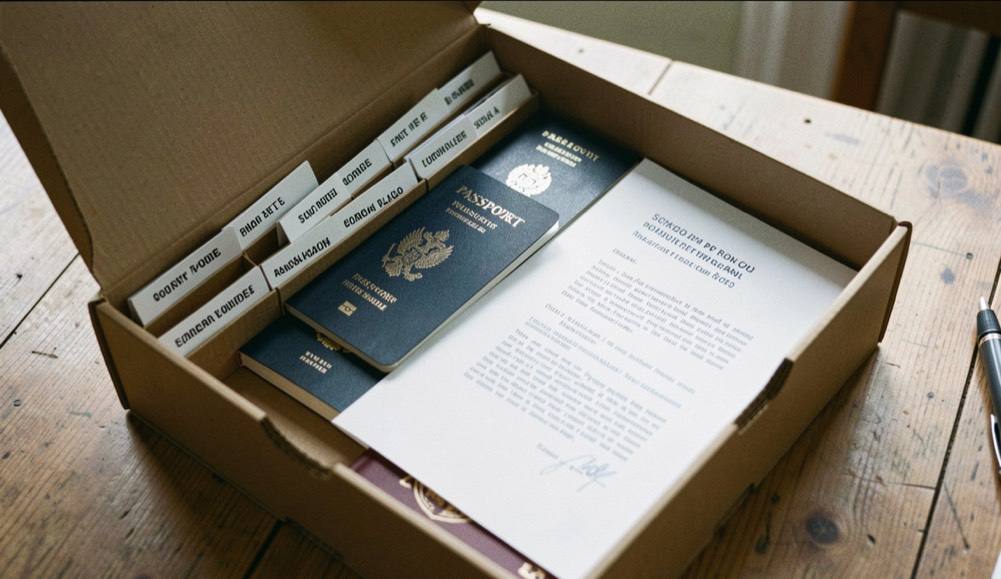
After that, a short section on the practical layer. Who holds the passport. Who books the dentist. What happens to kit that lives in the wrong house. How much notice a change needs. These are the questions that generate ninety per cent of the messages between two homes, and answering them once in writing saves hundreds of exchanges later.
- The ordinary week, with times, not just days.
- School holidays and half terms, including how the choice is made.
- Notice period for a change, and how a change is requested.
- Who holds documents, who books appointments, who buys the uniform.
- One line on how the plan gets reviewed, and when.
03 What to leave out
Leave out anything that reads as a judgement. A plan that contains the sentence "because you are always late" will be argued with rather than followed, and the underlying arrangement will be blamed for the tone.
Leave out rules about the inside of the other household. Bedtimes, screens, pudding and shoes in the hallway will differ, and children handle that difference far better than adults expect. What they handle badly is being asked to police it.
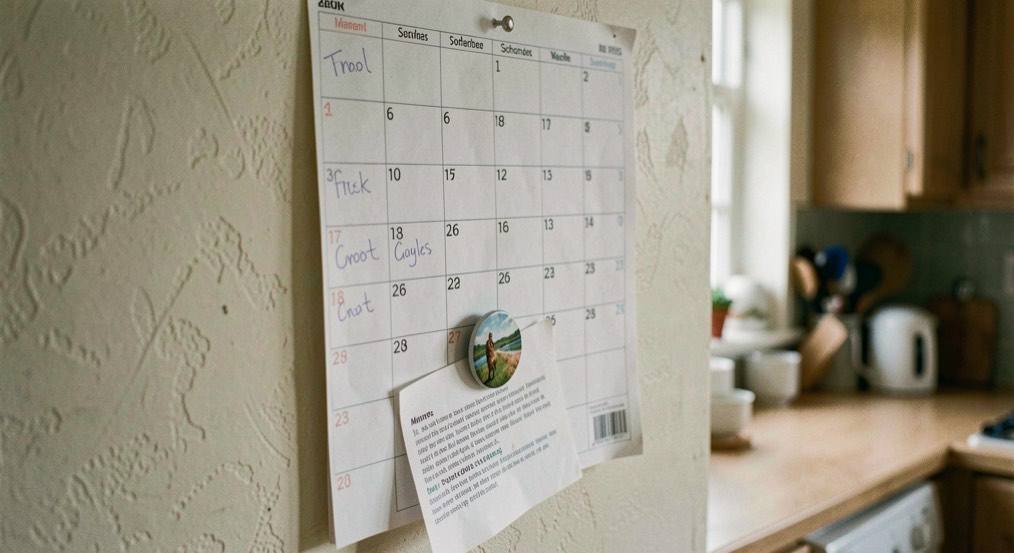
Leave out anything you cannot picture yourself doing in February. Ambition belongs in the rest of life. A plan should describe the version of your household that exists on a wet Wednesday, which is why it pairs so naturally with a working shared family calendar.
04 Reviewing without reopening
Plans age. A rhythm that suited a six year old rarely suits a thirteen year old with a Saturday job and strong views about buses. The trick is to build in a review so that change is a scheduled event rather than a crisis.
Once a year is usually enough, and the best moment is late spring, before the summer needs booking and while nobody is under pressure. Keep the review narrow: what has stopped working, and what one change would fix it. A review that reopens the whole document produces a worse plan and a worse week.
When something small needs adjusting mid year, adjust it and note the date on the page. A plan with a few pencil amendments in the margin is a living document. A plan that has never been touched in four years is usually being ignored rather than obeyed.
More like this
Co-parenting