The practical layer
Budgeting when a family runs two households
The arithmetic is unforgiving and the emotions are worse. The trick is to make the money conversation regular, written and extremely boring.
On this page
- Start with the plain arithmetic
- Splitting the shared costs
- One conversation a month, in writing
- Where the money actually goes
Published 30 July 2026.
01 Start with the plain arithmetic
Two households duplicate the fixed costs of living: rent or mortgage, council tax, energy, broadband, insurance. They also duplicate a slice of the child costs, because both homes need beds, bedding, some clothes and some equipment.
What they do not duplicate is the genuinely shared spending: school uniform, trips, clubs, kit, birthdays and anything with a receipt attached to an event rather than to a house. That distinction is the whole basis of a workable arrangement, and it is worth drawing on paper before discussing anything with anybody.
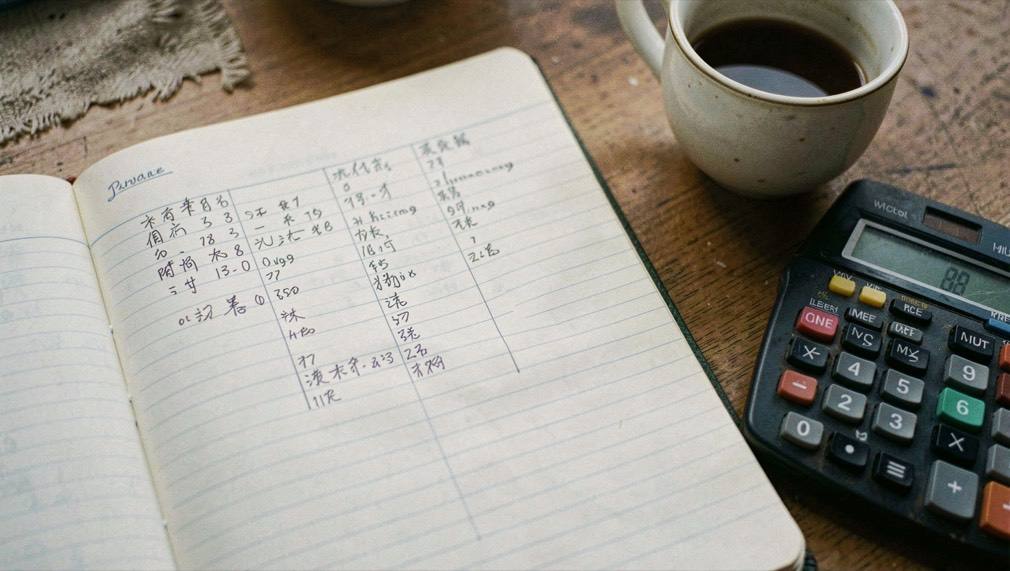
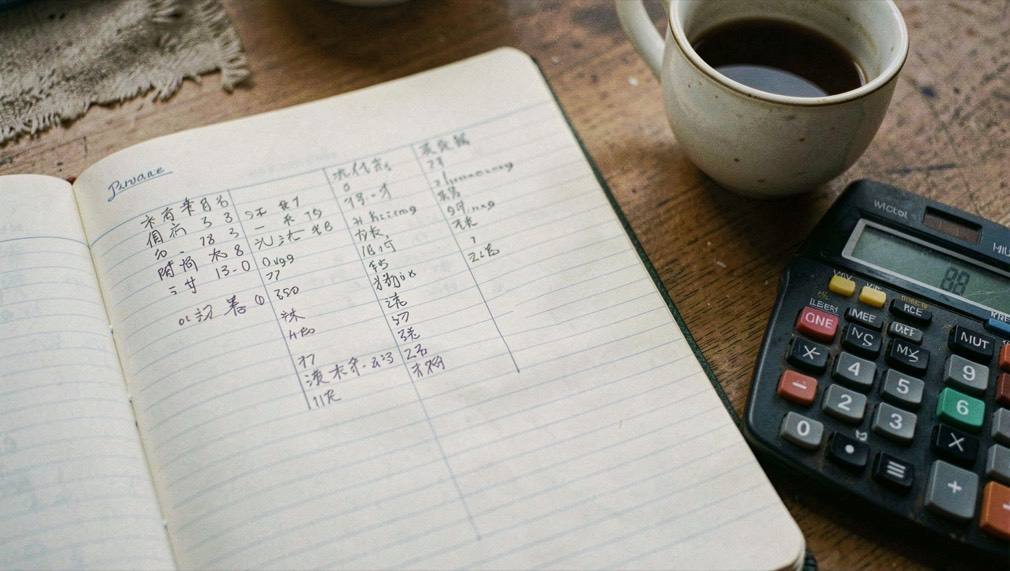
Spend the first month simply recording. Most households find the real total is lower than they feared and differently distributed than they expected.
02 Splitting the shared costs
A simple rule beats a fair rule that nobody can calculate. Households that adopt something like an even split of an agreed list, reviewed once a year, tend to argue far less than households that reassess proportionality every time a pair of football boots wears out.
Write down what is on the list. Uniform, school trips, one club each term, a share of a birthday. Anything not on the list is paid for by whoever chooses to buy it, and is not reclaimed. That last clause prevents most of the trouble.
Review the list annually alongside the parenting plan, not in the middle of a term when something expensive has just happened.
- Agree a written list of shared items.
- Agree one simple split and keep it for a year.
- Anything off the list is not reclaimed.
- Review the list once a year with the plan.
03 One conversation a month, in writing
Money discussed at a handover contaminates the handover. Money discussed continuously never resolves. A single monthly written summary is duller and works better: what was spent from the list, what is owed, what is coming next month.
Keep it to figures and items. No context, no justification, no comparison. The format matters because the format is what stops it becoming a conversation about something else, exactly as with messages between two homes.
Send it on the same date each month. A predictable dull message is easy to read; an unpredictable one is opened with suspicion.
04 Where the money actually goes
The costs that surprise people are rarely the big ones. They are the small recurring items: the second set of school shoes, the extra travel, the meals bought out because the week did not go to plan, the duplicate chargers.
Two of those are worth attacking directly. Travel costs can usually be reduced by changing where the handover happens, which is covered in handovers that work. Meals bought out drop sharply once each home keeps a short list of three meals it can produce from the cupboard.
The duplicates are worth the money and should be treated as a one off investment rather than a recurring irritation. The list of what is genuinely worth duplicating is in small habits that steady a shared week.
The other cost worth watching is the compensating purchase: the treat bought because a week went badly, the day out that is really an apology. These are entirely understandable and they add up quickly, and children read them accurately every time. A predictable small budget spent on ordinary things does more for a household than an occasional expensive gesture, and it is far easier to sustain across a school year.
More like this
Two homes